
Wondering what to do after couch to 5k? Well firstly congratulations on completing it! But now what?
As a UESCA-certified running coach with over 20 years of experience and personal bests of 15:09 for 5K, 31:13 for 10K, and sub-70 minutes for the half-marathon, I'll guide you through the critical next steps in your running journey.
This article will help you transition from the structured C25K program to independent training while setting realistic goals and avoiding common pitfalls that derail new runners.
Key Takeaways
- Celebrate your achievement, but use it as a launching pad for bigger goals
- Establish a sustainable weekly routine before adding complexity
- Choose your next goal based on your interests: speed (faster 5K) or distance (10K)
- Focus on consistency and injury prevention above all else
Celebrate Your Achievement (But Don't Stop There)
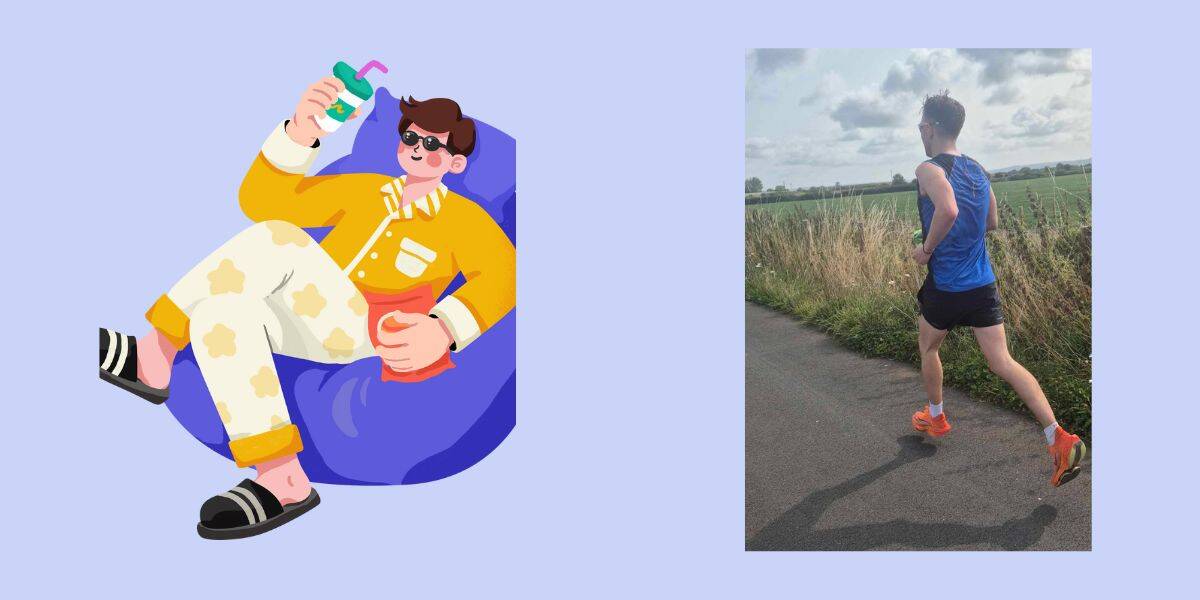
Completing Couch to 5K represents a significant milestone.
You've transformed from someone who perhaps couldn't run continuously to completing a 5K - that's genuinely impressive.
Take time to acknowledge this achievement, but more importantly, use it as momentum for what comes next.
Many runners make the mistake of celebrating and then losing momentum.
The transition period after C25K is actually the most critical phase of your running development. This is where you either build lasting habits or gradually drift away from the sport.
Your First Decision: Speed or Distance?
After C25K, you face your first major training decision. Based on my coaching experience, I recommend choosing one primary focus:
Option 1: Improve Your 5K Speed
If you enjoyed the feeling of pushing yourself during those final C25K sessions, focus on speed. Your goal should be to run your next 5K faster than your first one. This can be called going for a PB (personal best) or PR (personal record).
Realistic timeframe: 8-12 weeks to see meaningful improvement
Training focus: Add one speed session per week alongside your regular runs
Suitable for: Runners who prefer shorter, more intense sessions
Option 2: Progress to 10K Distance

If you found yourself wanting to keep running after completing your 30-minute sessions, distance progression might suit you better.
The 10K represents a natural next step that builds on your C25K foundation.
Realistic timeframe: 8-16 weeks, depending on your approach
Training focus: Gradually extend one run per week while maintaining consistency
Suitable for: Runners who enjoy the meditative aspects of longer runs
Establishing Your Post-C25K Routine
The biggest challenge after completing a structured program is maintaining consistency without external guidance. Here's my recommended approach:
Week 1-2 After C25K: Consolidation Phase
- Run 3 times per week for 20- 30 minutes each
- Focus on maintaining the habit rather than improving
- Use the same routes and timing as your final C25K weeks
- This phase prevents the common post-program motivation crash
Week 3-4: Gentle Progression
Choose your path:
For Speed Focus:
- Monday: 30-minute easy run
- Wednesday: 25 minutes with 4 x 1-minute faster efforts (not sprints, just comfortably hard)
- Saturday: 30-minute easy run
For Distance Focus:
- Monday: 30-minute easy run
- Wednesday: 30-minute easy run
- Saturday: Gradually extend by 5 minutes every other week (35 mins, then 40 mins, etc.)
Week 5+: Structured Training
This is where you can start following more specific training plans based on your chosen goal.
The Three Pillars of Post-C25K Success

1. Consistency Over Intensity
The most common mistake I see is runners jumping into advanced training too quickly.
Your body adapted to running through C25K, but that adaptation is still relatively recent.
Prioritize running regularly over running fast or far.
My recommendation: Aim for 3 runs per week for at least 8 weeks before considering 4+ runs weekly.
2. Listen to Your Body
Without C25K's structured rest days, you need to become your own coach. Unless, of course, you decide to work with one or perhaps join a running club - however, it's still very important to be aware of your body as
Learn to distinguish between normal exercise fatigue and potential injury warning signs.
Red flags to watch for:
- Sharp, localized pain (versus general muscle fatigue)
- Pain that worsens during a run
- Persistent soreness lasting more than 48 hours
- Any pain in joints rather than muscles
Always consult a medical expert, such as a doctor or physiotherapist.
3. Gradual Progression
The "10% rule" suggests increasing your weekly volume by no more than 10% each week.
This can vary, however, particularly when the volume of running may already be relatively low, so it's important to only gradually increase the volume sometimes. Running for time can be easier to track, so if you did a 20-minute run last week, try 25 in a few weeks' time if you feel ready.
Setting Your Next Goal
Based on my experience coaching runners, here are some ideas to help.
Short-term (6-12 weeks):
- Speed-focused: Improve 5K time by 20 - 30 seconds.
- Distance-focused: Complete a 10K run/walk
- Consistency-focused: Run 3x/week for 12 consecutive weeks
Medium-term (3-6 months):
- Speed-focused: Achieve a sub-XY-minute 5K (needs to be based on ability) or personal best
- Distance-focused: Complete a 10K race or half marathon
- Performance-focused: Join a running club
Common Post-C25K Mistakes to Avoid
Mistake 1: Abandoning Structure Completely
C25K provided a structure that many runners miss.
Don't abandon all structure - create a simple weekly schedule and aim to stick to it.
Mistake 2: Comparing Yourself to Others
Social media makes it easy to compare your progress to others.
Remember, you're on your own journey; it's important, certainly with training, that it's specific to you.
You won't progress as effectively and risk injuries if you follow training that is too difficult for you currently.
Mistake 3: Ignoring Strength Training
C25K focuses purely on running, but adding 2 basic strength sessions per week can really help you as a runner. Here are some of the key exercises I use.
- Squats and lunges for leg strength
- Planks for core stability
- Glute bridges for hip strength
Mistake 4: Running Every Run Too Fast
Many new runners think every run should be challenging. In reality, 80% of your runs should be at an easy, conversational pace. Save the hard efforts for designated workout days.
If you are looking to continue running, you may want to consider a GPS running watch, which can tell you how far you have run and the pace of your run, among numerous other stats.
When to Consider Hiring a Coach

As a coach myself, I believe professional guidance becomes valuable when:
- You want to achieve a specific time goal
- You've hit a performance plateau
- You're dealing with recurring minor injuries
- You're really unsure and would like the guidance and motivation of working with a coach.
However, many runners can successfully progress for months or even years using free online resources and following basic principles.
Another great option is to join a running club - often, they may have coaches there and run leaders who can provide valuable guidance and share experiences.
Planning Your First Post-C25K Race
Nothing motivates like having a race on the calendar.
Choose your first post-C25K race carefully:
For Speed Focus: Enter a local 5K within 8-12 weeks
For Distance Focus: Look for a 10K or "fun run" in 12-16 weeks
Race selection tips:
- Choose a local race with good support
- Avoid races with extreme weather or challenging terrain for your first event
- Register early to maintain motivation during training
- If you pick a trail race, remember you may need specialist shoes to suit the terrain.
Troubleshooting Common Challenges
"I Feel Slower Than During C25K"
This is completely normal. C25K's final weeks have you highly motivated and fresh.
Post-program, you're building consistency, which initially feels less exciting than rapid progress.
"I Don't Know How Hard to Push"
For easy runs: You should be able to hold a conversation
For harder efforts: Comfortably hard, but not all-out sprinting. When in doubt, err on the side of easier
If you are someone who likes using tech and stats, look into heart rate training.
"I'm Not Motivated Without the App"
Structure your own progression.
Set weekly goals, use different routes, or find apps specifically for your next goal (like a 10K training program).
Conclusion
Completing Couch to 5K is just the beginning of your running story.
The key to long-term success lies in building sustainable habits, progressing gradually, and staying injury-free.
Whether you choose to pursue speed, distance, or simply maintain fitness, the foundation you've built through C25K gives you everything you need to succeed.
You've already proven you can transform your fitness - now it's time to see how far that transformation can take you.
FAQ
What should I do immediately after completing Couch to 5K?
Take 1-2 weeks to consolidate your gains by running 3 times per week for 20-30 minutes each, focusing on maintaining the habit rather than improving.
Should I focus on running faster 5Ks or progressing to longer distances?
Choose based on your preference: if you enjoyed pushing yourself in final C25K sessions, focus on speed; if you wanted to keep running longer, progress toward 10K distance.
What's the most common mistake new runners make after C25K?
Running every session too fast - 80% of your runs should be at an easy, conversational pace with hard efforts saved for designated workout days.
