
As a UESCA-certified running coach with over 20 years in endurance sports and a 31:10 10k personal best, I've logged thousands of miles testing running shoes across every distance. Long distance running—whether that's half marathons, marathons, or those brutal 20+ mile training runs—demands footwear that can protect your legs while maintaining performance over extended efforts.
In this guide, I'll break down the best shoes for long distance running across different categories, from cushioned daily trainers to race-day marathon shoes.
I've personally tested most of these shoes through countless training cycles and races, so you're getting real-world experience, not just marketing specs.
What Makes a Great Long Distance Running Shoe?

Before we dive into specific recommendations, these are some of the key factors which actually matter for long distance running.
Cushioning and Protection: Adequate cushioning absorbs the repetitive stress and protects your muscles, joints, and connective tissue from breakdown.
Energy Return: Modern foam technologies don't just cushion—they return energy with each stride. Research published in Sports Medicine demonstrates that running economy improvements of just 1-4% from advanced shoe technologies can significantly impact performance over marathon distances [1].
Durability: Long distance shoes need to maintain their performance characteristics over 300-500 miles. The midsole foam shouldn't compress excessively, and the upper should remain structurally sound.
Comfort and Fit: Hot spots, blisters, or pressure points that seem minor at mile 5 become debilitating by mile 18. The shoe needs to fit securely without creating friction points, with enough room in the toebox for natural foot splay.
Weight Considerations: While lighter shoes reduce energy cost, extremely lightweight options often sacrifice cushioning.
In my experience training for long distance races and coaching athletes through their buildup, the sweet spot is finding a shoe that feels protective enough for 20+ mile efforts but responsive enough that you don't feel sluggish.
Best Overall Long Distance Running Shoes
Nike Zoom Fly 6 - Best Versatile Long Distance Trainer

Drop: 8mm
Stack Height: 40mm heel / 32mm forefoot
The Nike Zoom Fly 6 has become my primary long distance training shoe, and for good reason. It bridges the gap between daily trainers and pure racing shoes, offering performance features without the premium price tag of super shoes.
Key Technologies: The dual-layer midsole combines responsive ZoomX foam with more durable SR-02 foam, creating a balanced ride that feels fast enough for tempo work but protective enough for long runs. The carbon-infused Flyplate provides noticeable propulsion without the aggressive feel of full carbon plates.
My Experience: I recently completed a 30km run averaging 4:14/km (6:50/mile) in the Zoom Fly 6, and my legs felt remarkably fresh the next day. The minimal soreness after that distance and pace is testament to the shoe's ability to provide protection alongside performance.
I tell my athletes this is the one shoe that can handle nearly everything: steady runs, long runs, tempo work, and even threshold sessions.
Best For: Runners wanting a single versatile shoe for most long distance training, those incorporating marathon pace work into long runs, and athletes who appreciate performance features.
Asics Megablast - Best Cushioned Daily Trainer

Drop: 8mm
Stack Height: 45mm heel / 37mm forefoot
The Asics Megablast offers an incredibly unique ride that I've come to appreciate deeply for long distance training. What sets this shoe apart is its exceptionally bouncy FF TURBO SQUARED foam that creates energy return without using a carbon plate.
Key Technologies: The FF TURBO SQUARED foam is lighter, softer, and bouncier than any previous Asics foam technology. Unlike carbon-plated shoes that can feel aggressive, the Megablast has a slight lag between landing and push-off that's perfect for training days when you want to save your legs.
My Experience: It took about three runs to fully adapt to the Megablast's unique bounce characteristics, but now it's my go-to for easy runs (6:00-7:30/mile pace) and steady efforts. The shoe excels at keeping legs feeling fresh—exactly what you need when building weekly mileage for marathon training.
Despite the high stack height (45mm heel), the wide platform provides surprising stability on both ascents and descents. The ASICSGRIP outsole delivers reliable traction in wet conditions, giving confidence during year-round training.
Best For: High-mileage runners who want maximum cushioning, athletes building aerobic base with lots of easy miles, and runners who appreciate a unique bouncy sensation that protects legs for harder sessions.
Nike Alphafly 3 - Best for Marathon Racing

Drop: 8mm
Stack Height: 40mm
When it comes to marathon race day, the Alphafly 3 stands as one of the most efficient shoes available. This is Nike's premium marathon racing shoe, and it successfully addresses the shortcomings of version 2 by returning to the softer, more forgiving foam feel that made the original special.
Key Technologies: The dual Air Zoom units in the forefoot provide unmatched bounce and responsiveness—this is the key differentiator from the Vaporfly line. The fully connected ZoomX foam midsole feels noticeably softer than version 2, creating a more cushioned yet responsive ride perfect for marathon distances. The wider carbon-fiber Flyplate enhances stability while maintaining aggressive propulsion.
My Experience: During marathon pace workouts in the Alphafly 3, my heart rate data showed significantly lower readings than expected for the effort level. This demonstrates the shoe's efficiency—it genuinely reduces the physiological cost of maintaining race pace over long distances.
The all-new AtomKnit upper provides superior lockdown compared to previous versions, with excellent breathability that keeps feet cool during extended efforts. Having run a sub-70 minute half marathon at age 23, I understand how critical shoe efficiency becomes when pushing limits over long distances.
Best For: Marathon and half marathon racing, marathon pace workouts, runners seeking maximum efficiency and cushioning for race day, and athletes willing to invest in premium racing technology.
PUMA Fast-R Nitro Elite 3 - Best Versatile Racing Shoe
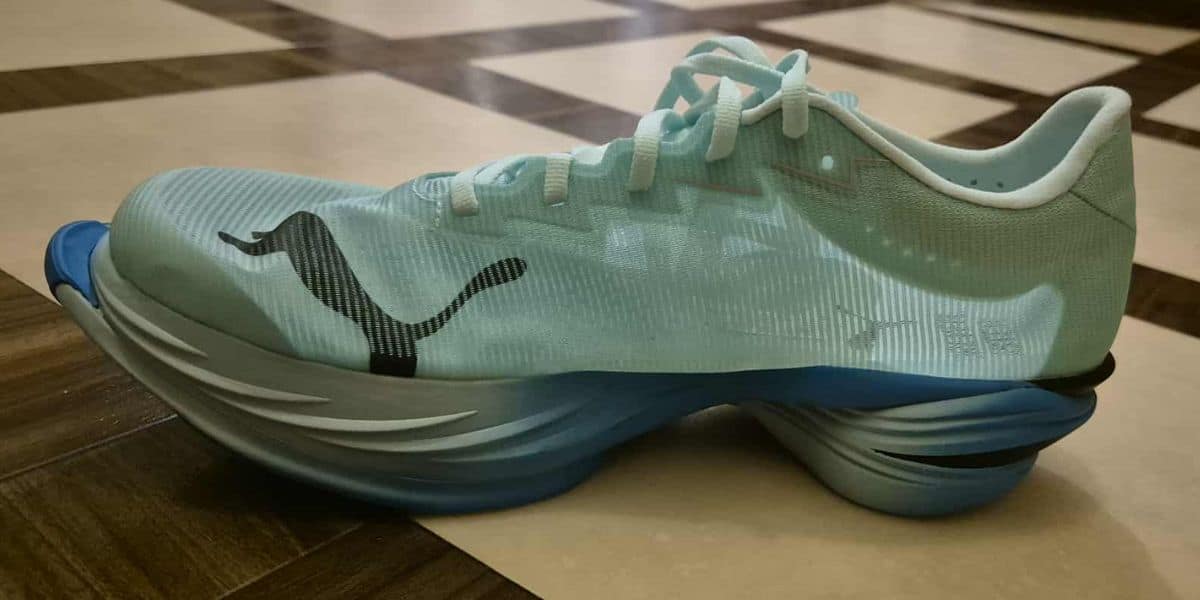
Drop: 8mm
Stack Height: 40mm/32mm
The PUMA Fast-R Nitro Elite 3 has earned its place as my primary race day shoe across all distances, including longer races. What makes this shoe exceptional for long distance racing is its unique combination of bouncy energy return similar to the Alphafly with aggressive forward propulsion like the Vaporfly.
Key Technologies: NITROFOAM ELITE technology delivers exceptional bounce and energy return that maintains effectiveness over marathon distances. The extended PWRPLATE carbon fiber system provides maximum propulsion without feeling harsh or unstable. At just 170g, it's remarkably lightweight, yet the ULTRAWEAVE upper provides secure fit without pressure points.
My Experience: During a challenging 5k in wet and windy conditions, I ran 15:37 while the shoe maintained excellent grip and provided noticeable energy return throughout. But I've also used this successfully for half marathon racing, where the lightweight construction and aggressive propulsion help maintain pace when fatigue sets in.
Best For: Runners racing multiple distances throughout the season, those wanting a single racing shoe for everything from 10k to marathon, and athletes who appreciate a unique ride that combines bounce with aggression.
For more details on finding the right racing shoes, check out my comprehensive guide on best running shoes for men.
How to Choose the Right Long Distance Shoe for You
There is no single "best" shoe that works for everyone. The optimal choice depends on several factors specific to your situation.
Consider Your Training Volume
40-50 miles per week: You can likely manage with 2 shoes, a cushioned daily trainer like the Asics Megablast or Novablast 4 for most miles, plus a performance shoe like the Nike Zoom Fly 6 for quality sessions.
50-70 miles per week: I recommend at least 3 shoes in rotation, a maximum cushioning option for easy/recovery days, a versatile trainer for steady and long runs, and a racing shoe for workouts and races.
70+ miles per week: Serious volume demands serious rotation. Consider 4+ shoes to distribute stress patterns differently and extend shoe lifespan. Include dedicated easy shoes, tempo/workout shoes, long run shoes, and racing shoes.
Match Shoes to Your Long Run Purpose
Not all long runs serve the same purpose in training. I program different types of long runs for my athletes, and shoe choice should reflect the session's goal.
Easy Aerobic Long Runs: These foundation-building efforts benefit most from maximum cushioning shoes like the Asics Megablast, Hoka Bondi 8, or Saucony Triumph 21. Comfort and protection matter more than performance.
Marathon Pace Long Runs: When incorporating sustained marathon pace segments, choose shoes with both cushioning and responsiveness like the Alphafly 3. These provide enough protection for the total distance while feeling efficient at goal pace.
Progressive Long Runs: Runs that finish faster than they start demand versatility. The Nike Zoom Fly 6 excels here, providing comfort early while still responding well when you drop pace in the final miles.
For more on building your aerobic foundation through long runs, see my guide on building an aerobic base.
Running Style Considerations
Your natural biomechanics should influence shoe selection. Coming from a competitive swimming background where I was my club's leading 100m butterfly athlete at 14-15, I learned early that individual mechanics matter enormously.
High Cadence Runners: If you naturally increase turnover when accelerating, consider shoes like the Asics Metaspeed Edge series that support quick leg turnover with their curved sole design and angled carbon plate.
Stride-Based Runners: Runners who lengthen stride when accelerating often prefer shoes with more aggressive propulsion like the Nike Alphafly 3 or Adidas Adios Pro 3 that amplify the push-off phase.
Heel Strikers: Look for shoes with adequate heel cushioning and smooth transitions. Most modern long distance shoes accommodate heel striking well, but generous heel stack heights (35-40mm+) provide extra protection.
Midfoot/Forefoot Strikers: You can typically handle slightly lower stack heights and may appreciate more ground feel. However, don't sacrifice cushioning entirely—even efficient strikers benefit from protection over long distances.
Budget Considerations
Long distance running shoes range from $140 to $285, with premium racing shoes commanding top prices. Here's how to allocate your budget strategically:
If you can only afford one shoe ($140-180): Choose a versatile trainer like the Nike Zoom Fly 6, Asics Novablast 4, or Saucony Triumph 21 that handles most training scenarios. Save premium racing shoes for when you're consistently hitting higher weekly mileage and targeting specific race goals.
If you can afford two shoes ($300-350 total): Pair a cushioned daily trainer (Asics Megablast, Novablast 4, or Brooks Glycerin 21) with a performance-oriented shoe (Nike Zoom Fly 6). This combination covers 95% of training needs effectively.
If you can afford three+ shoes ($500+): Add a dedicated racing shoe like the Nike Alphafly 3, PUMA Fast-R Nitro Elite 3, or Adidas Adios Pro 3. This complete rotation optimizes every training stimulus and race performance.
Remember that shoes typically last 300-500 miles, so factor replacement costs into your annual budget. Running 50 miles weekly means replacing shoes every 6-8 weeks at the lower durability range.
Common Mistakes When Choosing Long Distance Shoes
In coaching dozens of marathon runners and having made plenty of mistakes myself (like attempting a 28.3-mile run without proper recovery planning, which gave me Achilles tendinopathy), I've seen these errors repeatedly:
Choosing Based Solely on Racing Performance: That ultra-lightweight racing shoe that feels incredible for 5k races may leave your legs destroyed after a 20-mile training run. Training shoes and racing shoes serve different purposes.
Ignoring the Break-In Period: Some shoes feel perfect immediately, while others require 20-30 miles to fully adapt. Don't judge a shoe definitively on the first run, but also don't persist with shoes that cause pain or hot spots by mile 3.
Prioritizing Cushioning Over Everything: Maximum cushioning doesn't automatically mean optimal performance. Excessively soft shoes can compromise running economy and create instability. Find the sweet spot between protection and responsiveness.
Using Race Day Shoes for All Training: I see too many runners wearing their $285 Alphafly 3s for easy recovery runs. This wastes the shoe's lifespan and provides no benefit—you can't access the shoe's performance advantages at recovery pace.
Neglecting Shoe Rotation: Running in the same shoes every day creates repetitive stress patterns that increase injury risk. Research published in Scandinavian Journal of Medicine & Science in Sports found that runners who rotated between multiple shoe models had a 39% lower injury risk compared to those using a single pair [3].
Buying Based on Trends Rather Than Fit: The shoe that works brilliantly for elite runners with perfect biomechanics might be completely wrong for your feet, gait, and goals. Test shoes yourself rather than blindly following recommendations.
Building Your Long Distance Shoe Rotation
Here's how I structure shoe rotations for athletes at different levels, based on my experience coaching runners from beginners to competitive marathoners:
Beginner Long Distance Runner (20-35 miles/week)
Primary Shoe: Cushioned daily trainer (Asics Novablast 4, Saucony Triumph 21, or Brooks Glycerin 21)
Use: 80% of weekly miles including easy runs and long runs
Secondary Shoe: Versatile performance trainer
Use: 20% of weekly miles for tempo runs or race day
This minimal rotation provides variety without overwhelming decision-making. The cushioned trainer protects developing legs during base building, while the performance trainer introduces faster paces gradually.
Intermediate Long Distance Runner (40-60 miles/week)
Easy/Recovery Shoe: Maximum cushioning (Asics Megablast or Hoka Bondi 8)
Use: 40% of weekly miles for recovery runs and very easy long runs
Primary Training Shoe: Versatile trainer (Nike Zoom Fly 6 or Asics Novablast 4)
Use: 40% of weekly miles for steady runs, moderate long runs, tempo work
Racing/Workout Shoe: Performance racing shoe (Nike Alphafly 3 or PUMA Fast-R Nitro Elite 3)
Use: 20% of weekly miles for key workouts and race day
This three-shoe rotation optimizes each training stimulus. Easy days get maximum protection, quality sessions get performance benefits, and you're preserving expensive racing shoes by limiting their use.
Advanced Long Distance Runner (60+ miles/week)
Easy Days: Maximum cushioning (Asics Megablast)
Use: 35% of weekly miles
Steady/Long Runs: Versatile trainer (Nike Zoom Fly 6)
Use: 35% of weekly miles
Tempo/Threshold: Firmer performance shoe (Adidas Adios Pro 3)
Use: 15% of weekly miles
Racing: Premium racing shoe (Nike Alphafly 3 or PUMA Fast-R Nitro Elite 3)
Use: 15% of weekly miles
This four-shoe rotation distributes stress patterns optimally while matching specific shoes to training intensity. High-volume runners benefit most from purposeful rotation because they're constantly stressing their bodies.
For more on structuring your training with different workout types, see my article on types of runs.
Maintaining Your Long Distance Shoes
Proper shoe maintenance extends lifespan and maintains performance characteristics. Here's what I recommend:
Rotate Between at Least Two Pairs: Midsole foam requires 24-48 hours to fully decompress and recover its cushioning properties.
Air Dry After Runs: Remove insoles and stuff shoes with newspaper to absorb moisture. Never use direct heat sources like radiators or dryers, which break down foam compounds.
Monitor Mileage: Track mileage in each pair using apps like Strava or training logs. Most shoes deliver peak performance for 200-300 miles, then maintain acceptable performance until 400-500 miles. Replace when cushioning feels noticeably diminished or when you experience new aches.
Inspect Regularly: Check for uneven wear patterns on the outsole, compressed areas in the midsole, or upper deterioration. These signs indicate it's time for replacement, even if mileage seems low.
Reserve Racing Shoes for Quality: Premium racing shoes should only be used for races and key workouts. Every easy run in racing shoes wastes their limited lifespan without providing any performance benefit.
Testing Your Long Distance Shoes
Before committing to long runs or races in new shoes, test them systematically. I learned this the hard way after my Achilles tendinopathy incident—rushing into long efforts with unfamiliar footwear invites disaster.
Test Run 1 (5-6 miles easy): Assess basic comfort, fit, and initial response. Note any hot spots or pressure points that might worsen over distance.
Test Run 2 (8-10 miles with varied pace): Include some tempo or marathon pace work to evaluate how the shoe responds at different intensities. This reveals whether it can handle pace changes during long runs.
Test Run 3 (12-15 miles): Approach half your target long run distance. Monitor how the shoe feels when fatigued, as this predicts performance in the later miles of marathon training.
Test Run 4 (Full long run distance): Only after successful progression should you attempt your full long run distance in new shoes. Even then, carry backup options if possible.
This systematic approach has saved countless athletes from race day disasters. No matter how good a shoe looks or feels in the store, real-world testing reveals its true character.
Frequently Asked Questions
Should I use the same shoes for training and racing long distance?
It depends on your goals and budget. Recreational marathoners can successfully train and race in the same versatile shoes. However, competitive runners seeking personal bests benefit from dedicated racing shoes with advanced technologies that provide marginal gains.
What's the ideal amount of cushioning for long distance running?
There's no universal answer ideal cushioning depends on your body weight, running mechanics, injury history, and preferences. The key is finding the balance where you feel protected but not disconnected from the ground.
Can I use carbon-plated shoes for all my long distance training?
While technically possible, I don't recommend it. Carbon-plated racing shoes deliver performance benefits at specific intensities, but they're overkill for easy runs and recovery work.
Is it worth investing in expensive long distance running shoes?
For competitive runners targeting specific time goals and running high weekly mileage, premium shoes like the Nike Alphafly 3 ($285) can provide genuine performance advantages and efficiency gains that justify the investment. However, recreational runners focused primarily on finishing distances rather than times often find excellent value in mid-tier shoes ($140-180) like the Asics Novablast 4 or Saucony Triumph 21.
References
[1] Barnes, K. R., & Kilding, A. E. (2015). Running economy: measurement, norms, and determining factors. Sports Medicine, 45(8), 1031-1051.
[2] Hoogkamer, W., Kipp, S., Frank, J. H., Farina, E. M., Luo, G., & Kram, R. (2018). A comparison of the energetic cost of running in marathon racing shoes. Sports Medicine, 48(4), 1009-1019.
[3] Malisoux, L., Chambon, N., Delattre, N., Gueguen, N., Urhausen, A., & Theisen, D. (2013). Injury risk in runners using standard or motion control shoes: a randomised controlled trial with participant and assessor blinding. Scandinavian Journal of Medicine & Science in Sports, 24(1), 129-137.
