
As a 31-minute 10k runner with over 20 years of running experience and a UESCA-certified running coach, I've tested countless running shoes throughout my career.
Finding the right shoe can make the difference between achieving your personal best and struggling through your training.
In this comprehensive guide, I'll share the best running shoes for men across different categories, from elite racing shoes to cushioned daily trainers.
What Makes a Great Running Shoe?
Before diving into specific recommendations, it's important to understand what separates an exceptional running shoe from an average one:
Performance Features: Advanced foam technologies, carbon plates, and strategic design elements that enhance energy return and reduce running effort.
Purpose-Built Design: The best shoes excel at their intended use whether that's daily training, racing, or recovery runs.
Comfort and Fit: Proper lockdown, breathable materials, and thoughtful construction that prevents soreness and blisters.
Durability: Construction quality that withstands high mileage while maintaining performance characteristics.
How I Test Running Shoes
My testing methodology combines competitive racing experience with coaching knowledge:
- Real-world testing across multiple distances and paces
- Performance evaluation during workouts and races
- Assessment of comfort, fit, and recovery impact
- Comparison against established benchmarks in each category
With a 15:09 5k personal best and multiple half-marathon victories, I test shoes at the intensities where performance differences become most apparent.
The 7 Best Running Shoes for Men
1. PUMA Fast-R Nitro Elite 3 - Best Overall Racing Shoe
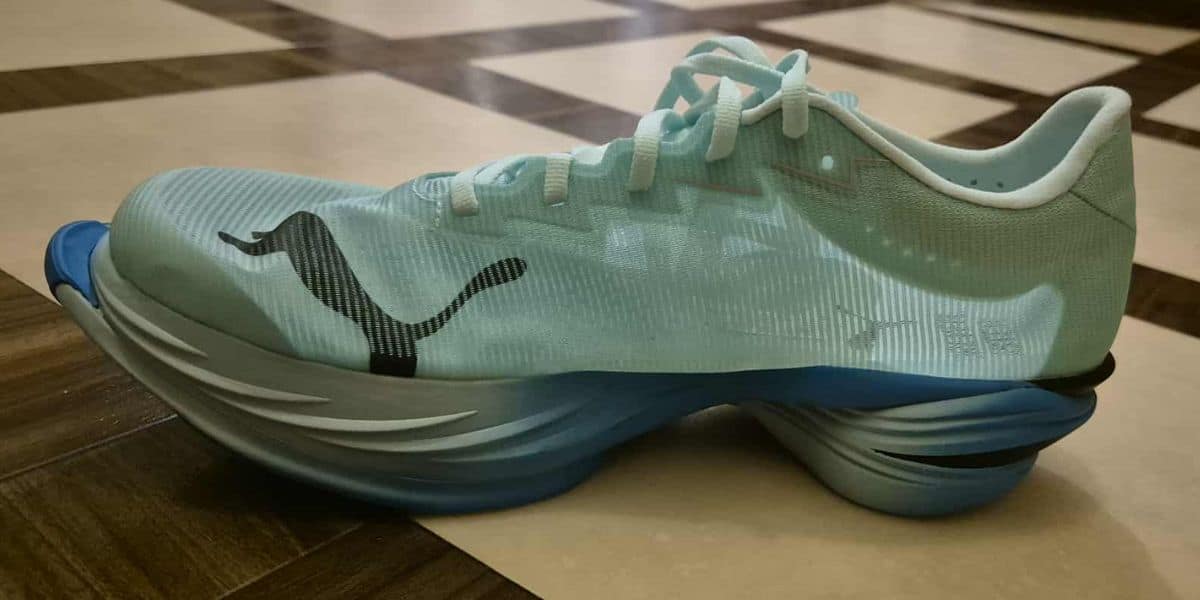
Approximate Weight: 170g (US size 9)
Best For: Race day from 5k to marathon
The PUMA Fast-R Nitro Elite 3 has earned its place as my go-to race day shoe, replacing even my beloved Asics Metaspeed Edge Paris. What sets this shoe apart is its unique combination of bouncy energy return similar to the Nike Alphafly with the aggressive forward propulsion of the Vaporfly.
Key Features:
- NITROFOAM ELITE technology delivers exceptional bounce and energy return
- Extended PWRPLATE carbon fiber system for maximum propulsion
- Ultra-lightweight at just 170g
- ULTRAWEAVE upper provides secure fit without pressure points
Performance: During a challenging 5k race in wet and windy conditions, I ran 15:37 while the shoe maintained excellent grip and provided noticeable energy return throughout. The lightweight construction makes it feel effortless, while the aggressive propulsion helps during the crucial final kick.
Pros:
- Unique ride that combines bounce and aggression
- Exceptional lightweight design
- Versatile across race distances
- No break-in period required
Cons:
- Limited availability (frequently sells out)
- Premium price point
2. Nike Vaporfly 4 - Best for 5k and 10k Racing

Approximate Weight: 190g (men's size 9)
Best For: 5k and 10k races
The Nike Vaporfly 4 represents a deliberate shift toward shorter race distances. As someone who has raced in every Vaporfly model since the original, I can confirm this is the lightest and most responsive version yet—but also the most specialized.
Key Features:
- Reduced stack height (35mm heel, 29mm forefoot) creates direct feel
- Full-length carbon fiber Flyplate
- Improved upper with traditional tongue design
- ZoomX foam for energy return
Performance: At my 5k pace of around 3 minutes per kilometer, this shoe makes high effort feel comfortable. The reduced weight and direct connection to the ground are immediately noticeable.
Pros:
- Lightest Vaporfly ever produced
- Best fit in the series
- Exceptional for shorter distances
- Direct, responsive feel
Cons:
- Limited versatility beyond 10k
- Not ideal for marathon racing
- More specialized than previous models
3. Nike Alphafly 3 - Best for Marathon Racing

Approximate Weight: 218g (UK size 9)
Best For: Marathon and half-marathon racing
The Alphafly 3 successfully addresses the shortcomings of version 2, returning to the softer, more forgiving foam feel that made the original special. This is Nike's most cushioned racing shoe, designed specifically for long-distance efforts.
Key Features:
- Dual Air Zoom units in forefoot for unmatched bounce
- Fully connected ZoomX foam midsole
- Wider carbon-fiber Flyplate for stability
- All-new AtomKnit upper with superior lockdown
Performance: During marathon pace workouts, my heart rate data showed significantly lower readings than expected, demonstrating the shoe's efficiency. The dual Air Zoom units provide that distinctive bouncy sensation that carries you through long efforts.
Pros:
- Exceptional efficiency for marathon distances
- Softer foam than version 2
- Improved upper and fit
- Lighter than previous model
Cons:
- Premium price
- High stack height (40mm)
- Overkill for shorter races
4. Asics Metaspeed Edge Paris - Best for Cadence-Based Runners

Asics Metaspeed Edge Paris
Approximate Weight: 185g (US size 9)
Best For: 5k to half marathon racing
The Metaspeed Edge Paris is optimized for runners who increase their turnover rather than stride length when accelerating. This was my primary race shoe before the PUMA Fast-R Nitro Elite 3 arrived, and it remains excellent for speed work and shorter races.
Key Features:
- FF TURBO PLUS foam for soft landings and energy return
- Angled carbon plate supports quick cadence
- Curved sole design encourages rapid turnover
- Ultra-light MotionWrap 2.0 upper
Performance: After a demanding 6×1km workout at 10k pace, I achieved a perfect 120% efficiency score on my Coros app, demonstrating how effectively this shoe reduces running effort.
Pros:
- Optimized for high-cadence runners
- Lightweight (185g)
- Leaves legs feeling fresh
- Excellent heel collar comfort
Cons:
- Specific to cadence-based running style
- Premium price
- Best at faster paces only
5. Nike Zoom Fly 6 - Best Training Shoe with Race Day Features

Approximate Weight: 265g (UK size 9)
Best For: Tempo runs, steady runs, long runs
The Zoom Fly 6 bridges the gap between daily trainers and pure racing shoes. It's become my go-to for steady runs and long runs where I want to inject pace without using my dedicated race shoes.
Key Features:
- Dual-layer midsole (ZoomX and SR-02 foam)
- Carbon-infused Flyplate
- Woven mesh upper for breathability
- Waffle grip outsole for wet weather
Performance: I recently completed a 30km run averaging 4:14/km with minimal leg soreness the following day—testament to the shoe's ability to provide protection alongside performance.
Pros:
- Versatile across training scenarios
- Excellent comfort and fit
- Good value for performance features
- Reliable wet weather traction
Cons:
- High stack height requires caution on uneven surfaces
- Snug fit may not suit wider feet
- Not specialized enough for pure racing
6. Asics Megablast - Best Cushioned Daily Trainer

Approximate Weight: 223g (approximately)
Best For: Easy runs, steady runs, high-mileage training
The Megablast represents Asics' exploration into maximum cushioning without carbon plate technology. This shoe offers an incredibly bouncy ride that keeps legs feeling fresh throughout training cycles.
Key Features:
- FF TURBO SQUARED foam for exceptional bounce
- No carbon plate for natural foot movement
- Lightweight despite high stack (45mm heel, 37mm forefoot)
- Engineered woven upper for breathability
Performance: It took about three runs to adapt to the unique bouncy characteristics, but now it's my primary cushioned trainer. The slight lag between landing and push-off is perfect for training days when I want to save my legs.
Pros:
- Unique bouncy ride unlike any other trainer
- Keeps legs feeling fresh
- Lightweight for the cushioning level
- Good wet weather performance
Cons:
- Requires adjustment period
- Not ideal for race day
- Premium price for a trainer
How to Choose the Right Running Shoe
By Training Purpose
Daily Training: Nike Zoom Fly 6, Asics Megablast
Race Day (5k-10k): PUMA Fast-R Nitro Elite 3, Nike Vaporfly 4
Race Day (Half-Marathon+): Nike Alphafly 3, PUMA Fast-R Nitro Elite 3
Speed Work: Asics Metaspeed Edge Paris, Nike Vaporfly 4
By Running Style
Cadence-Based Runners: Asics Metaspeed Edge Paris
Stride-Based Runners: Asics Metaspeed Sky Paris, Nike Alphafly 3
Neutral Runners: Most options work well
High-Mileage Runners: Asics Megablast, Nike Zoom Fly 6
My Current Shoe Rotation
As a competitive runner training for multiple distances, here's how I currently deploy these shoes:
Race Day: PUMA Fast-R Nitro Elite 3 (all distances), Nike Vaporfly 4 (5k only)
Speed Work: Asics Metaspeed Edge Paris, Nike Vaporfly 4
Tempo/Steady Runs: Nike Zoom Fly 6
Long Runs: Nike Zoom Fly 6, Asics Megablast
Easy/Recovery: Asics Megablast
This rotation ensures I'm using the optimal tool for each training stimulus while preserving my premium racing shoes for competitions and key workouts.
Conclusion
The running shoe landscape in 2026 offers unprecedented choice and technology.
The PUMA Fast-R Nitro Elite 3 stands out as the best overall racing option, combining unique ride characteristics with exceptional performance across distances.
For marathon specialists, the Nike Alphafly 3 is a fantastic option, while the Nike Zoom Fly 6 offers the best value for versatile training.
Remember that the "best" shoe depends on your specific needs, goals, and running style.
Consider your primary racing distances, training volume, and budget when making your decision.
The shoes featured in this guide have all been extensively tested through real-world training and racing.
Each offers genuine performance benefits that can help you achieve your running goals—whether that's a 5k personal best or your first marathon finish.
Frequently Asked Questions
Do I need different shoes for training and racing?
While not essential, using dedicated racing shoes preserves their performance characteristics and extends their lifespan. A versatile trainer like the Nike Zoom Fly 6 can handle most training while dedicated race shoes deliver marginal gains on competition day.
How long do running shoes last?
Racing shoes typically last 150-300km when used primarily for races and key workouts. Training shoes generally last 300-500km depending on factors like runner weight, running surface, and shoe construction.
Are expensive racing shoes worth it?
For competitive runners seeking personal bests, the efficiency gains from premium racing shoes can justify the investment. Recreational runners may find better value in versatile trainers that offer some performance features at lower prices.
Should I buy racing shoes if I'm a beginner?
Beginners benefit more from comfortable, durable daily trainers. Once you've established consistent training and are targeting specific race goals, investing in racing shoes becomes more worthwhile.
How do I know if I'm a cadence-based or stride-based runner?
Cadence-based runners naturally increase their leg turnover when speeding up, while stride-based runners lengthen their stride. If unsure, video analysis or working with a coach can help identify your natural tendency.
